
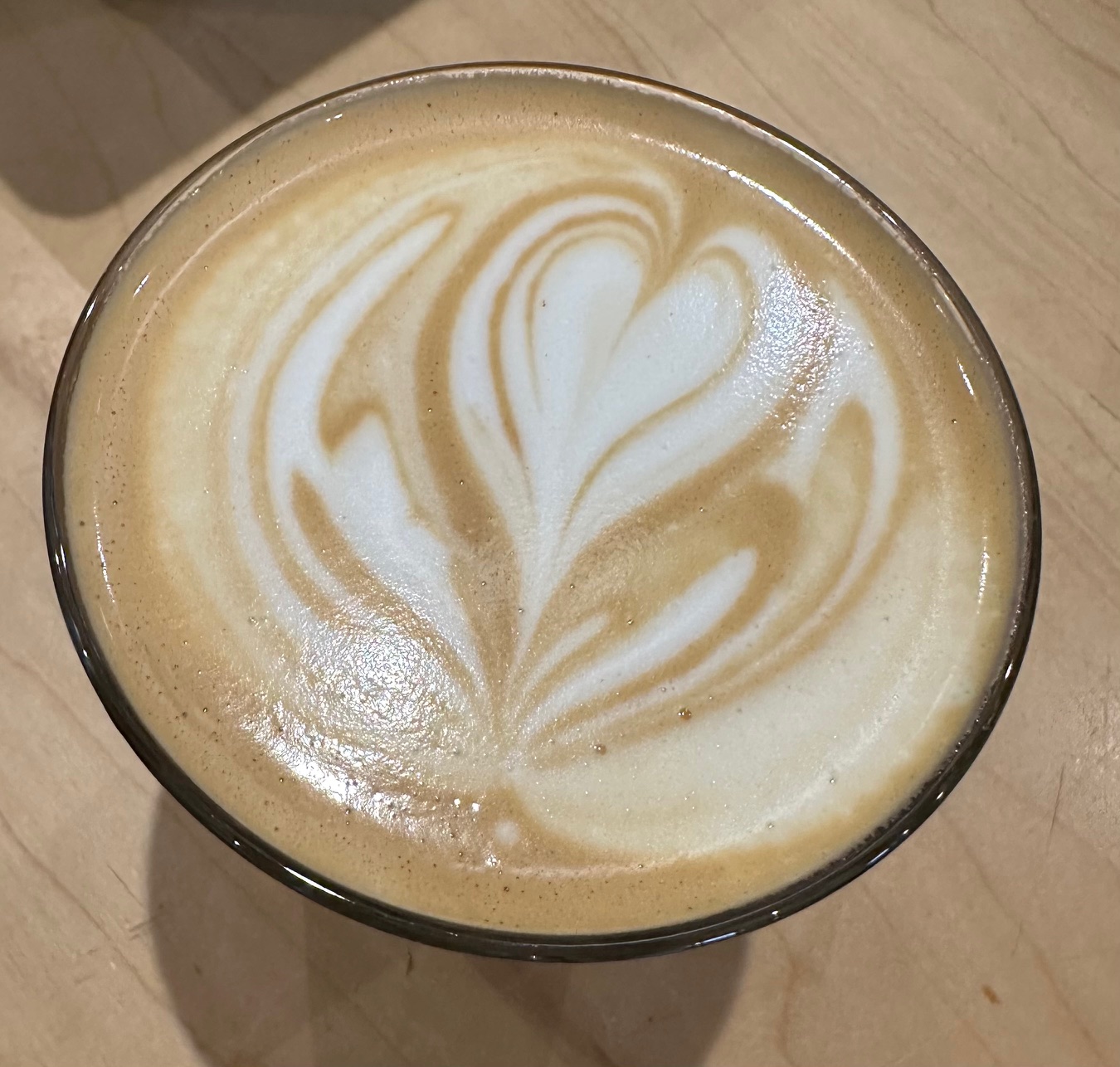
I wanted to share some of my thoughts about the difference makers in terms of getting to a good vs. great latte.
From the perspective of making a great latte, it begins with the beans. First off, pick a great espresso. Espresso is highly sensitive to freshness and roast profile. Beans that are less than a week off-roast tend to produce an overly thick crema due to retained carbon dioxide. That crema, while visually impressive, can interfere with proper extraction and mute subtle flavor notes. On the other hand, beans that are past their prime yield a flat, lifeless shot. The ideal window for espresso is typically two to five weeks after roasting. Within this range, you’ll get a rich, aromatic shot with a dense but not foamy crema. Pre-ground coffee quickly loses its aromatics once exposed to air. You can make a drinkable cup with it, but it won’t offer the depth or crema quality of freshly ground beans. The same goes for anything done with capsules.
Grind size is another critical variable. Espresso demands a fine and consistent grind. Conical burr grinders are better at maintaining flavor integrity as they generate less heat during grinding preserving volatile aromatic compounds. Blade grinders produce uneven particles and excess heat, both of which degrade flavor and result in uneven extraction. A proper espresso grind should feel like soft powder and be as fine as table salt and the ideal shot should extract in about 25 to 30 seconds. Too fast means your grind is too coarse. Too slow, and it’s likely too fine or overdosed and your machine might even hang.
Tamping and puck preparation also play a huge role. A common mistake is tamping with inconsistent pressure or allowing the coffee bed to remain uneven. This leads to channeling, where water flows through the easiest path, leaving some grounds underextracted and others overdone. Both will detract from the flavor profile For best results, evenly distribute the grounds before tamping and use steady, level pressure, around 30 pounds. A level, compact puck ensures uniform resistance, setting the stage for balanced extraction and full-bodied crema.
Next comes the espresso machine. Quality machines maintain stable water temperature and brewing pressure 92 to 96C and 9 bars of pressure. Many entry level machines fall short in one or both areas, which results in sour, weak shots or overextracted bitter ones. With a precise machine you can dial in a flavor profile that’s ideal for you with a specific roast.
Steaming milk is where technique often unravels. Most people either overheat the milk or introduce too much air, creating dry foam or scalded milk with a bitter edge. Start with cold milk in a cold pitcher. For me, whole milk typically provides the best texture and sweetness, though barista oat milk and other alternatives offer excellent consistency and steaming performance. Introduce air only during the first few seconds, then fully submerge the steam tip to build heat and create a whirlpool. This motion breaks down larger bubbles and creates the silky microfoam you’re aiming for. Stop steaming around 145 to 150 degrees Fahrenheit, any hotter, and the milk loses its natural sweetness and develops a cooked flavor.
Experienced baristas recognize dairy milk is a seasonal product. Its flavor, protein structure, and fat content can vary depending on the cows’ diet and time of year. This can affect how it tastes and how it behaves when steamed. Alternative milks, especially oat-based barista blends, are usually more consistent carton to carton.
Even with great espresso and milk, messing up the pour can result in a latte that tastes disjointed or lacks proper integration. Swirl the milk just before pouring to maintain its texture. Begin with a slight tilt of the cup and pour steadily. Too fast, and the milk will separate. Too slow, and you’ll disrupt the crema. A good latte pours in a smooth, continuous stream and blends milk and espresso into a cohesive drink. The final volume should follow a ratio of about one part espresso to three or four parts milk, depending on preference. This just requires practice and patience! I’m still not great at this, let alone creating art.
One last but essential detail is equipment cleanliness. Espresso machines and grinders accumulate oils, fine particles, and milk residue that can quickly become rancid. If your latte tastes unexpectedly bitter or sour, cleaning your group head, portafilter, steam wand, and grinder burrs can make an immediate difference.
With the right beans, a conical burr grinder, attention to technique, and a clean workspace, making a café-quality latte at home is entirely within reach. Small improvements at each step can turn a frustrating cup into something genuinely satisfying.
I think that’s it for now, LOL!